
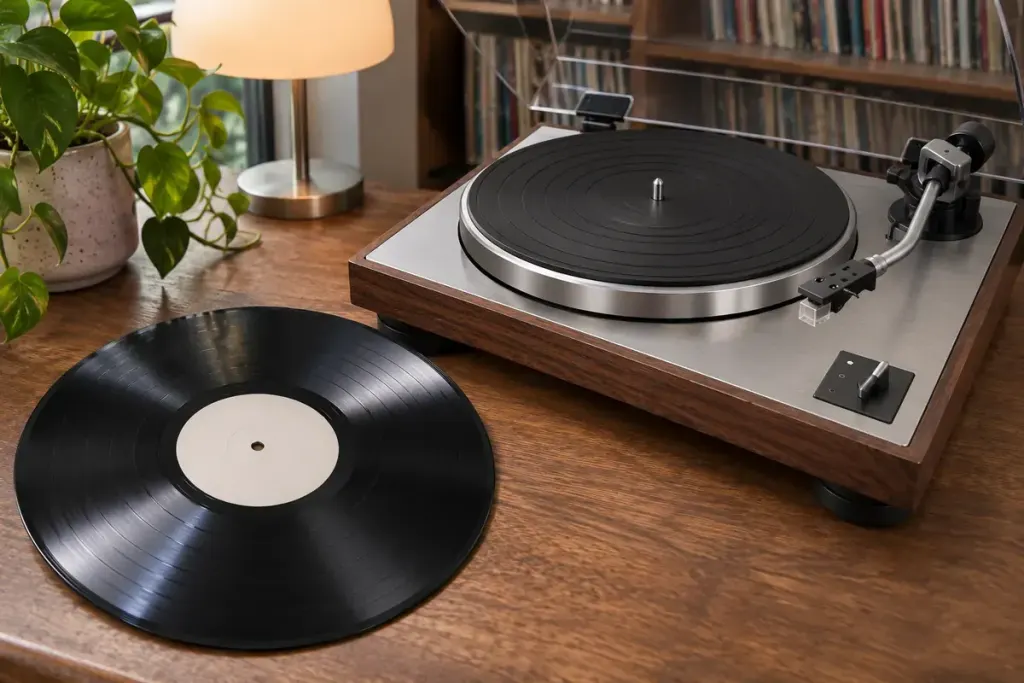
A twelve-inch disc comes out of the sleeve, and your hand moves automatically toward the 33⅓ setting. Often that will be right. But diameter describes the physical record, while revolutions per minute describes how quickly it should turn. One does not uniquely determine the other.
A twelve-inch release can be cut for 45 rpm. A small disc’s large centre hole also raises a separate question about an adapter; it is not a complete speed instruction. Read the release’s label, sleeve or reliable edition documentation rather than relying on size alone.
Find the two controls in the manual
Some automatic turntables have a record-size selector as well as a speed control. The Audio-Technica AT-LP60 manual, for example, identifies them separately. The speed control selects platter speed, while the size selection belongs to the automatic operating setup. Use the manual for your own model, since controls and supported formats vary.
Do not assume an older record can be played safely just because it fits over the spindle. Supported speed, stylus and record format need to match. If they do not, leave the disc unplayed until you have suitable guidance and equipment.
Give speed its own collection field
A compact entry might read: format, diameter, stated speed, side or disc number, and source of the speed information. If the label is unclear, write “speed not yet confirmed” rather than filling the space with the usual value.
In an invented example, a collector owns two twelve-inch editions with similar artwork. One label states 33⅓ and the other 45. Separate speed fields immediately reveal a playback difference that a photograph of the covers might conceal.
Wrong-speed playback can make familiar voices or rhythms sound unusual, but listening for a strange voice should not be your primary identification method. Establish the format before playing, especially with unfamiliar or fragile material.
Once the correct setup is known, keep it with the edition record. Future you should be able to choose the right setting from a clear note, without having to rediscover the same small-print instruction every time the record returns to the turntable.