Collection Notes
An Old Home Recording Needs a Listening Plan Before a Play Button
A tape labelled with a relative’s handwriting can feel like an invitation to press play immediately. If it may contain an irreplaceable recording, a pause…

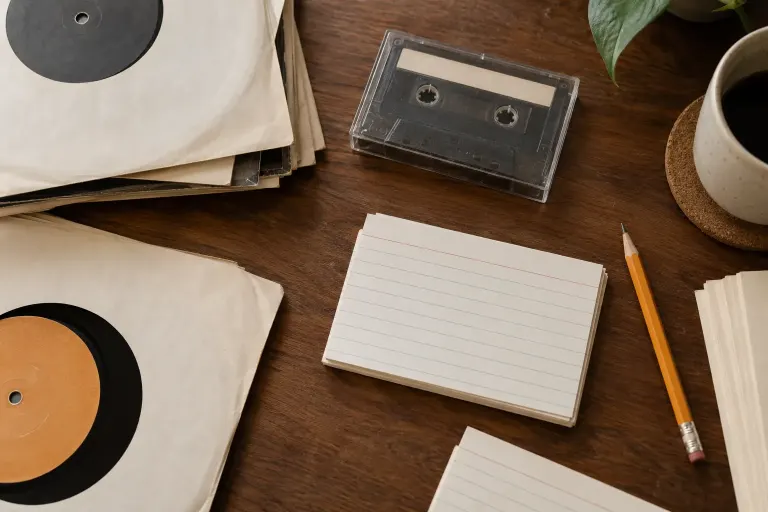
Names, versions and listening notes that keep the context attached to a recording.
A tape labelled with a relative’s handwriting can feel like an invitation to press play immediately. If it may contain an irreplaceable recording, a pause…
A record may sit comfortably in two parts of your collection even though the sleeve uses only one genre label, or none. Your catalogue can accommodate that…
Small marks near the centre of a record can be difficult to read and easy to overinterpret. If you are documenting your own copy, begin with the characters…
A studio name in the credits can become a memorable part of an album’s identity. Read the verb beside it before treating it as the place where every sound…
A sleeve may name a country of manufacture, a recording location, and a label address. These details describe different relationships and should not be…
A shop sticker on an old record sleeve can bring back the place where a collection began. You can record that detail without immediately deciding to remove…
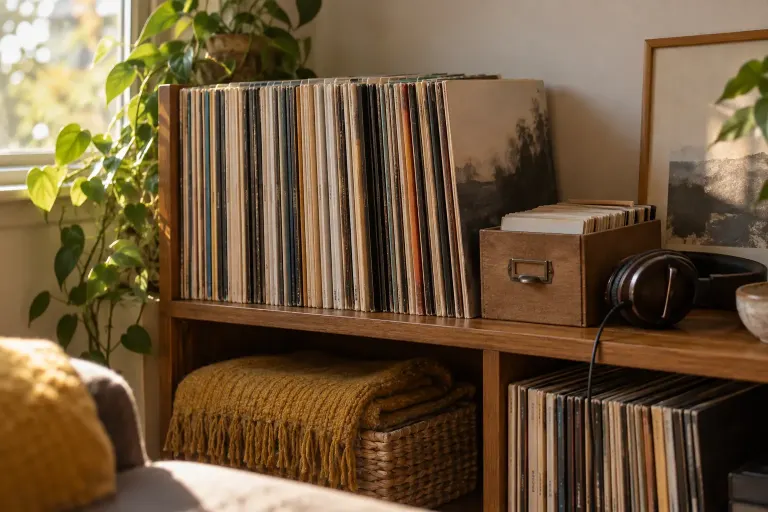
Finding a sleeve without its record creates an odd catalogue problem: you own part of the release, but cannot play it. A clear entry keeps that distinction…
A booklet lists one duration while your player displays another. Before deciding that the recording is different, check exactly what each time refers to.