
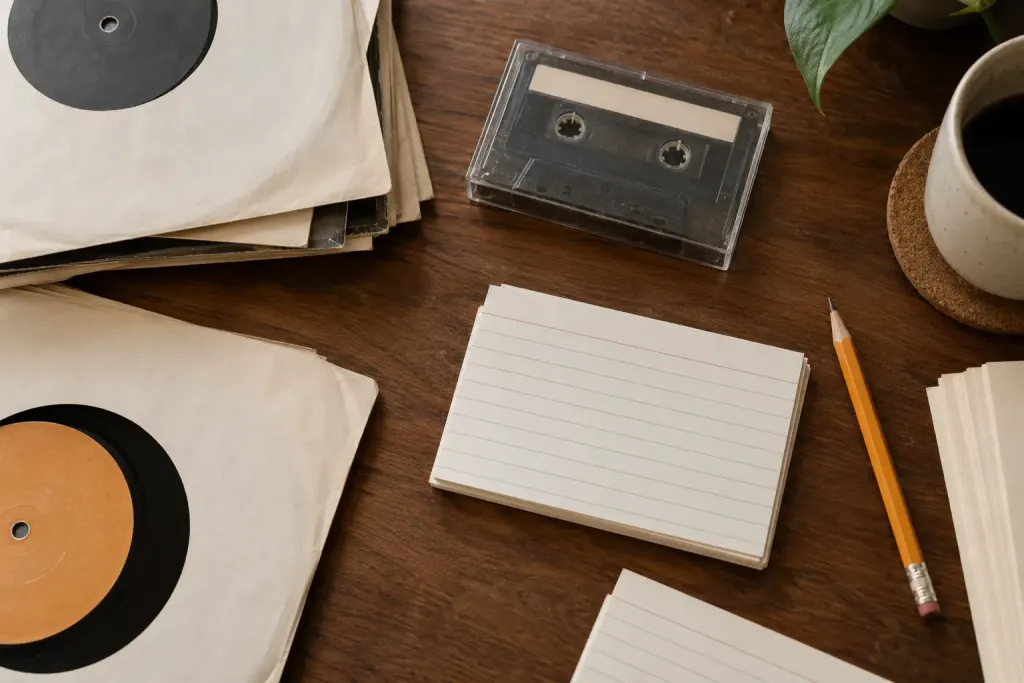
A tape labelled with a relative’s handwriting can feel like an invitation to press play immediately. If it may contain an irreplaceable recording, a pause for identification is worthwhile.
The Library of Congress provides care and handling guidance for audiovisual materials, including format-specific considerations. Use that guidance as a starting point and seek qualified help for damaged or unfamiliar media. Repeated experimental playback is a poor way to find out whether a fragile item can survive playback.
Begin with information you can record without opening or altering the carrier: the label, case, format, approximate provenance and any visible damage. Photograph the exterior if useful. Transcribe uncertain handwriting with a question mark rather than settling it through a family guess.
A family recording can contain private conversation as well as music. Owning the physical carrier does not automatically settle every question about publishing its contents. Discuss intended use with the relevant people before posting an excerpt online.
If a specialist makes a transfer, keep their description of the process with the files. Distinguish an untouched transfer from a listening copy that has been edited, level-adjusted or divided into tracks.
The first successful outcome may be a reliable catalogue entry and an agreed next step, not an immediate digital release. Preserving the context gives the voices a better chance of remaining understandable when the handwriting and family memories are no longer easy to interpret.
Visual note: the image illustrates the subject, not a documented event.