
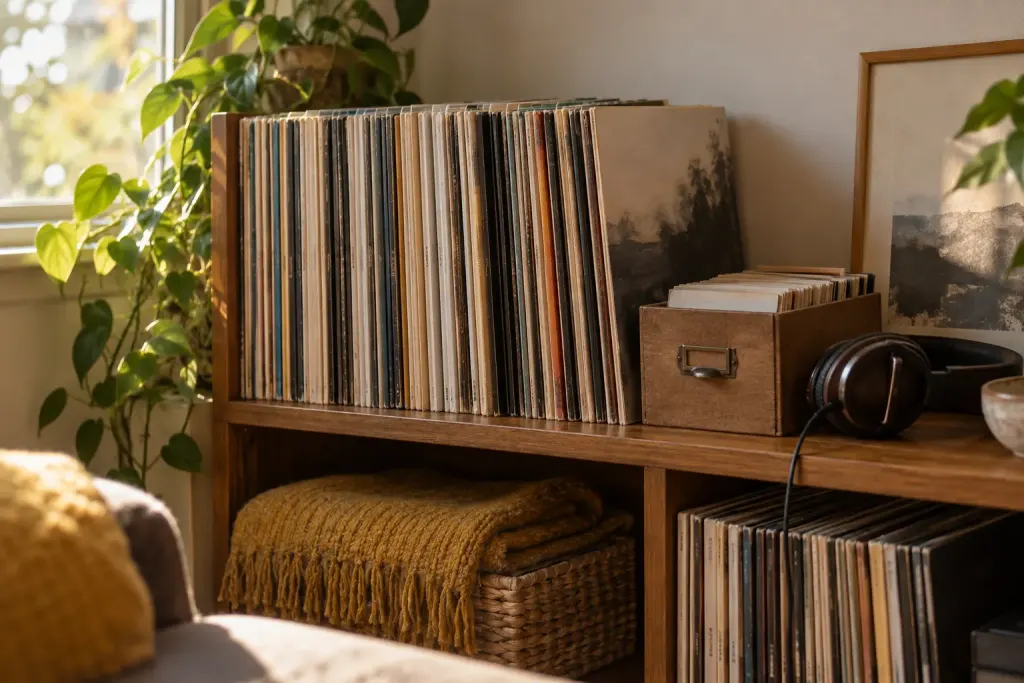
A carefully arranged shelf stops helping when its logic exists only in your memory. If you move records between rooms or share the collection, a small location index can be useful. Start with broad, stable locations rather than numbering every individual position.
Give each area a plain name
Use labels such as “living room, upper left” or “cabinet two, lower shelf.” Choose names another person can recognise. Record the location beside an album’s existing catalogue entry instead of creating a second list that will drift out of date.
Avoid overly precise positions unless you need them. “Seventh item from the left” becomes wrong as soon as another recording is returned nearby. A shelf or section is often enough to narrow the search.
Update when a move actually happens
Test the system with one section. Move a few items, update their locations, and ask someone to find one using only the note. Their difficulties will reveal whether your labels are too personal or vague.
Leave room for temporary locations, such as a small listening pile, but keep that pile manageable. The index should make returning music easier, not create an elaborate filing obligation. If updating it repeatedly feels burdensome, simplify the location scheme before expanding it to the rest of the collection.