
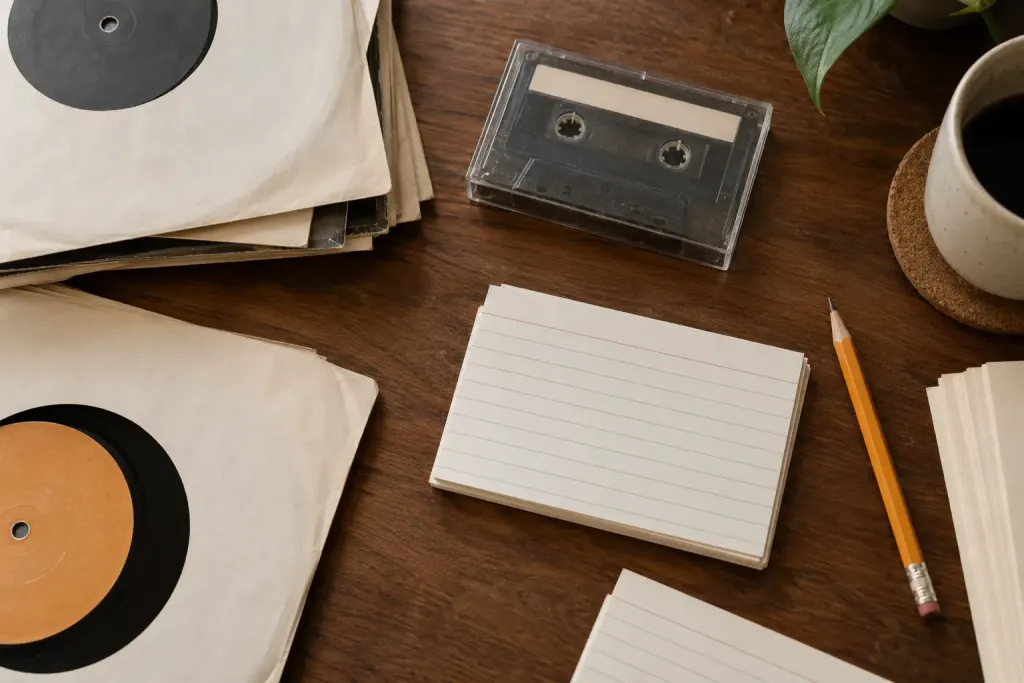
Long recordings do not always fit into one sitting. If interruptions repeatedly send you back to the beginning, try leaving a listening bookmark. It should tell you where to return and what you were paying attention to, without summarising everything already heard.
Record an address and a clue
Write the release, track or movement, and approximate timestamp. Add one plain observation, such as “the quieter passage after the full ensemble.” The timestamp locates the place; the description helps confirm that you have found the right moment.
If the source does not show elapsed time, use the track boundary or another reliable marker. Avoid a note that depends only on remembering how far the progress bar had moved.
Restart with a little context
On returning, begin slightly before the marker when practical. Listen to the transition into the passage rather than treating it as an isolated fragment. Notice whether your earlier question still seems useful.
Keep the bookmark separate from a finished review. Its job is continuity, not judgment. Once you complete the recording, delete it or turn it into a short listening note. A small, temporary record can make long works easier to revisit without making every session feel like an assignment.