
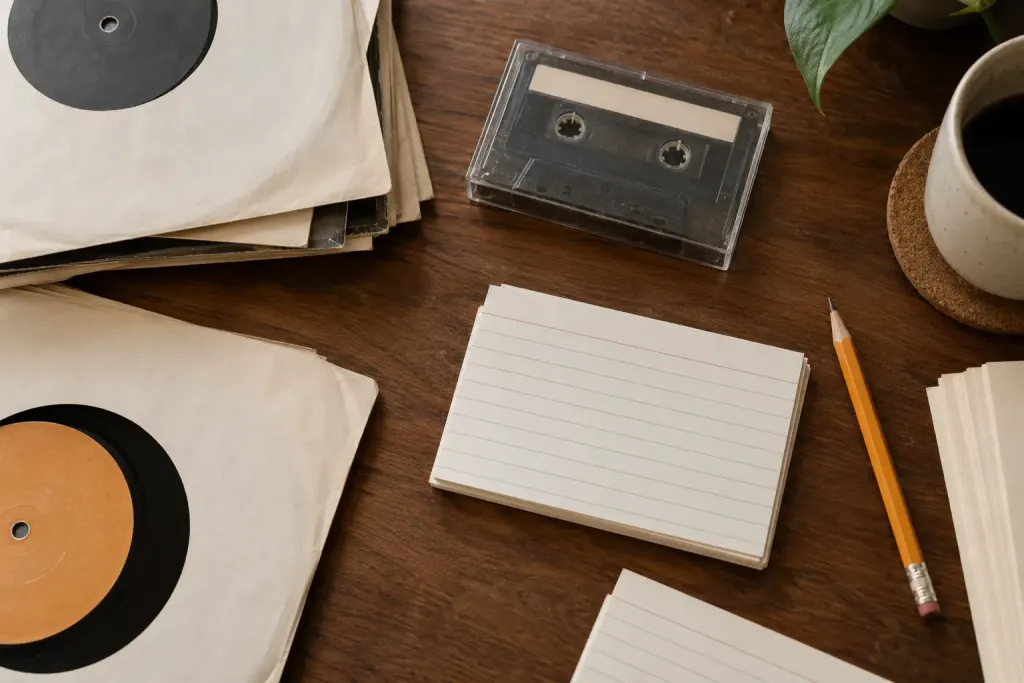
A tidy sleeve is pleasant to find, but it does not tell you everything about the recording inside. Keep visible condition notes separate from playback observations so that each statement says what you actually checked.
Describe what you can see
Note a split seam, a missing booklet or writing on a cover in plain language. Avoid formal grading terms unless you are deliberately following a defined grading system and understand its scope.
Do not infer hidden damage from a photograph alone. Likewise, an attractive cover is not evidence that every track plays as expected.
Record the extent of a listen
If you checked only one side or a few tracks, say so. Add the playback date and a short description of the event you noticed. Keep equipment or setup details when they help explain the observation.
A noise heard once may need another careful check before you attribute it to the item. Avoid escalating an uncertain impression into a confident diagnosis.
Make the next check obvious
Use a field such as “Still to check” for missing information. This helps when returning to an item after several weeks.
Connect the entry to your recording identification notes. Separating appearance, playback and uncertainty gives you a more honest record than a single adjective that tries to summarise everything at once.