
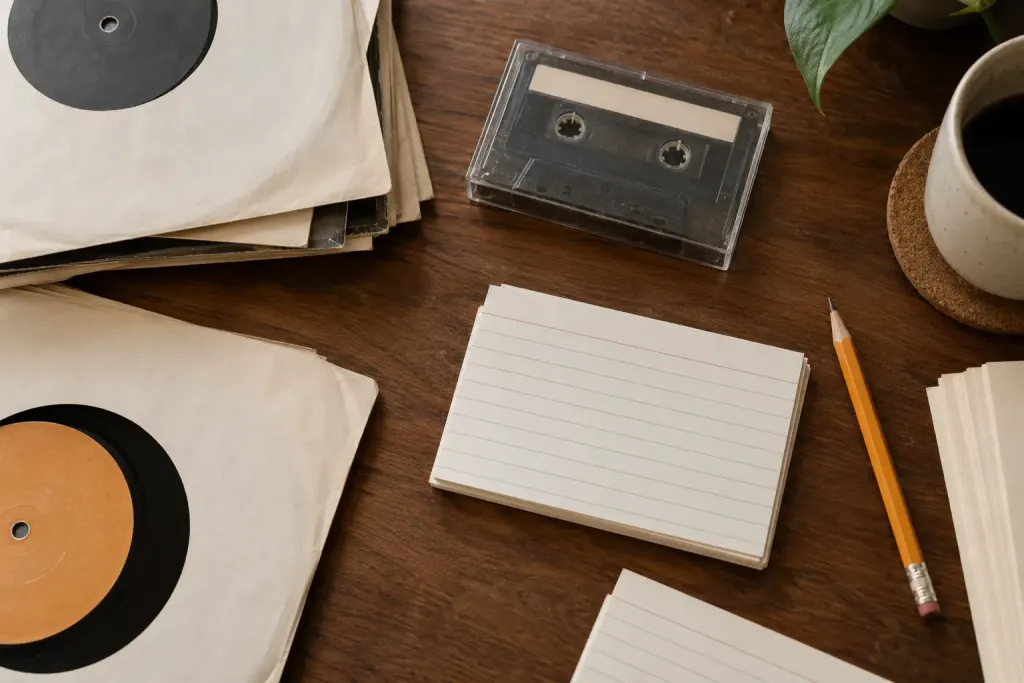
Lending a record is easy to remember on the day and surprisingly easy to forget a month later. A short shared note can preserve the practical details without making the exchange feel like a formal archive transaction.
Identify the actual item
Write the title, performer and a useful edition detail. For a set, count the discs and inserts together. Two copies with similar covers can otherwise be confused when the item comes back.
Keep any contact details in a private place. A public collection catalogue does not need to reveal who has borrowed something or how to reach them.
Agree the return plan
Choose a date or a clear occasion for checking in. Mention any existing sleeve damage or missing insert before the loan, using neutral observations rather than vague descriptions such as perfect or terrible.
If an item is too fragile or important for you to lend comfortably, say so before agreeing. A listening session together may suit the situation better.
Close the note when it returns
Check the contents together and mark the loan complete. Remove information you no longer need instead of accumulating a permanent history of other people’s movements.
The same identifiers used in a useful recording note make this process easier. The goal is modest: both people should know which item changed hands and what happens next.