
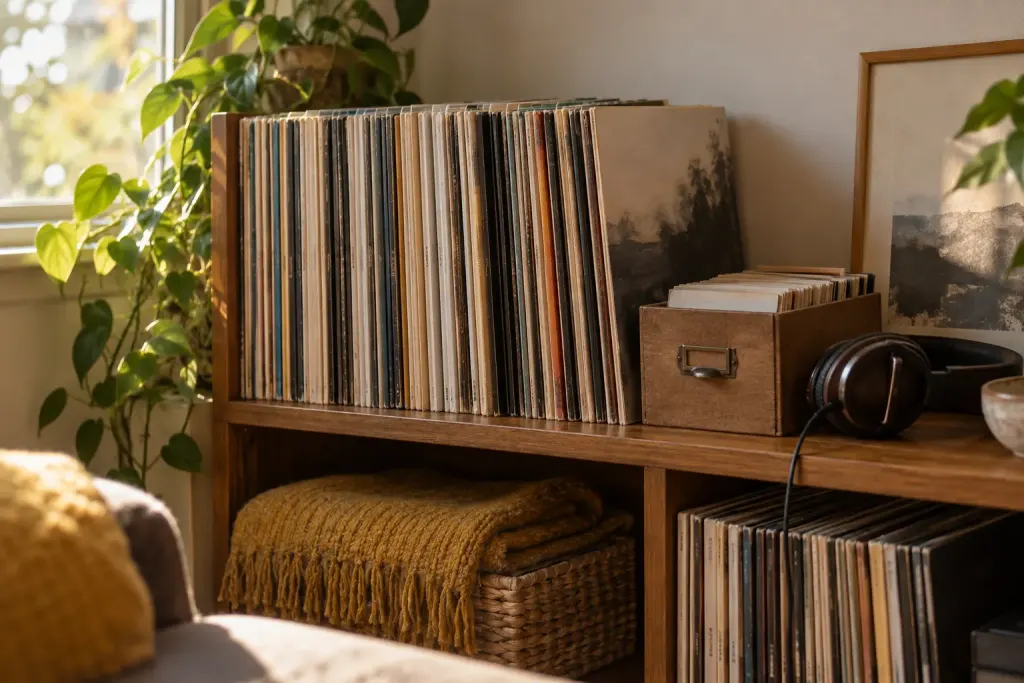
The best record shelf is the one you can use without turning a quiet evening into a search party. Before buying another storage box, take a look at the collection you have: which records get played, which sleeves are awkward to reach, and where the next few arrivals would go.
Start with the room, then the records
A sunny corner may photograph beautifully and still be a poor permanent home for a collection. The Library of Congress guidance on audiovisual materials recommends a clean, stable environment, limited light exposure and distance from heat sources. It also advises keeping discs upright and supporting them properly. These are general care principles, not a treatment plan for damaged recordings.
Walk through the room as though you were carrying a favourite album. Is the shelf beside a radiator? Could an open window let rain reach it? Can you lift a sleeve out without moving a stack of objects? Fixing an inconvenient location often matters more than choosing a clever sorting system.
Give each section a job
Try a simple arrangement: records you reach for often, the main collection, and a small listening queue. That last section is an editorial suggestion, not a preservation requirement. It gives unfamiliar music a visible place without making the rest of the shelf harder to browse.
Keep the queue small enough to feel inviting. Five albums with a reason to revisit them can be more useful than a whole shelf labelled “someday.” A note such as “listen for the piano entrance” is a better invitation than a vague promise to appreciate something properly.
Choose an order you can explain
Artist name, genre and personal associations all work differently. Pick the method that makes sense to the people using the collection. If a record moves between categories every week, the categories may be doing more work than they need to.
Leave a little room to browse and return sleeves. Check that the shelving can safely carry the weight; a row of records is heavier than its tidy appearance suggests. For fragile or damaged items, seek advice appropriate to the actual format rather than experimenting with a cleaning recipe.
Keep the story nearby
A short catalogue can hold details that a spine cannot. Our guide to useful recording notes offers a manageable starting point. The aim is simple: less searching, fewer awkward movements, and more evenings when choosing a record feels easy.